
















 💖
💖































































































































































 by
by 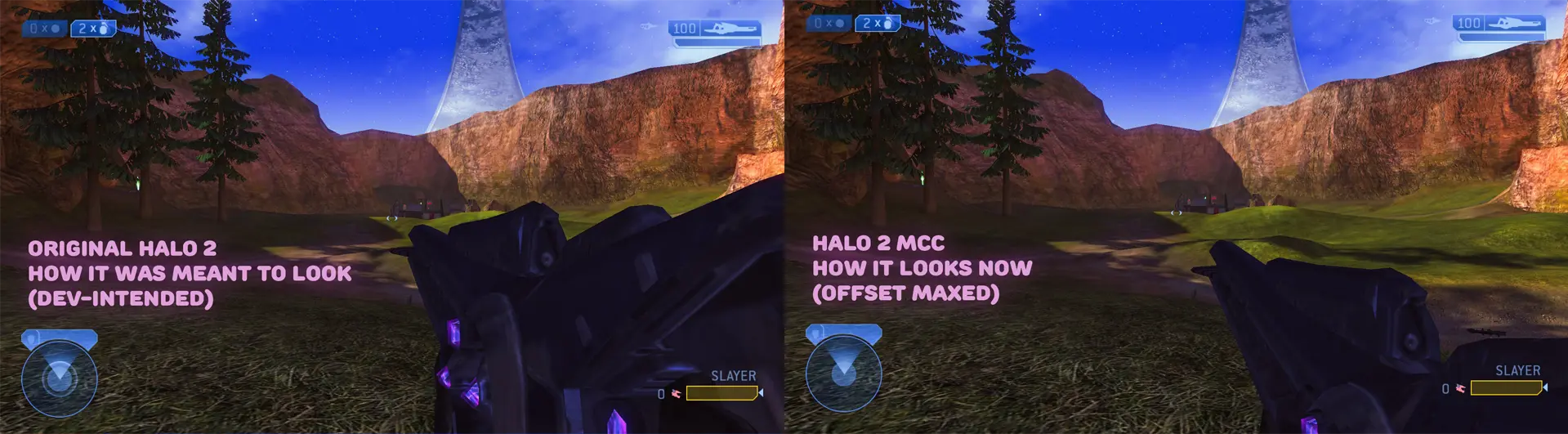
in recent years, fps games have leaned heavily into player customization, from FOV sliders to HUD scaling, crosshair tweaks, and more. but one option has quietly reshaped how these games feel to play, and that's weapon offset.
at first glance it seems harmless, just another setting meant to help players tailor the experience. but once you look closer, it becomes clear that it's not just a cosmetic tweak. it's a choice that undermines the visual integrity of the game, encourages competitive conformity, and slowly erodes the immersive presentation developers used to build with intention.
i want to talk about weapon offset because it bothers me, and because i don't like what it represents. players are beginning to accept design choices without thinking about how they affect the game's identity, and it's become part of a larger trend where people take whatever customization the industry throws at them, even when it undermines the presentation the developers intended. modern fps design has become less intentional than it used to.
today's shooters are directionless and over‑engineered, built around bloated systems, shallow customization, and trend‑chasing because they aren't made with any identity, vision, or any real talent. the developers of 2000s shooters understood identity, intention, and craft. older games in the 2000s had purpose behind every choice.
weapon offset is a perfect example of that broader design trend. despite its good intentions, it does more harm than good, and it exposes a deeper tension in game design between player agency and developer intent.
the psychology of optimization
players are natural optimizers. give them a system, and they'll find the most efficient way to exploit it, even if it wasn't designed for that purpose.
- min‑maxing behavior is baked into competitive play. if shifting the weapon a little gives a clearer view of the battlefield, players will adopt it instantly
- social mimicry reinforces it. once high‑level players settle on a specific offset, everyone else follows to avoid feeling disadvantaged
- this creates a meta setting, a dominant configuration that becomes the de facto standard not because it looks good, but because it's effective
what starts as a harmless customization option quickly turns into a competitive lever, and once that lever exists, aesthetic integrity often gets sacrificed.
game presentation vs player control
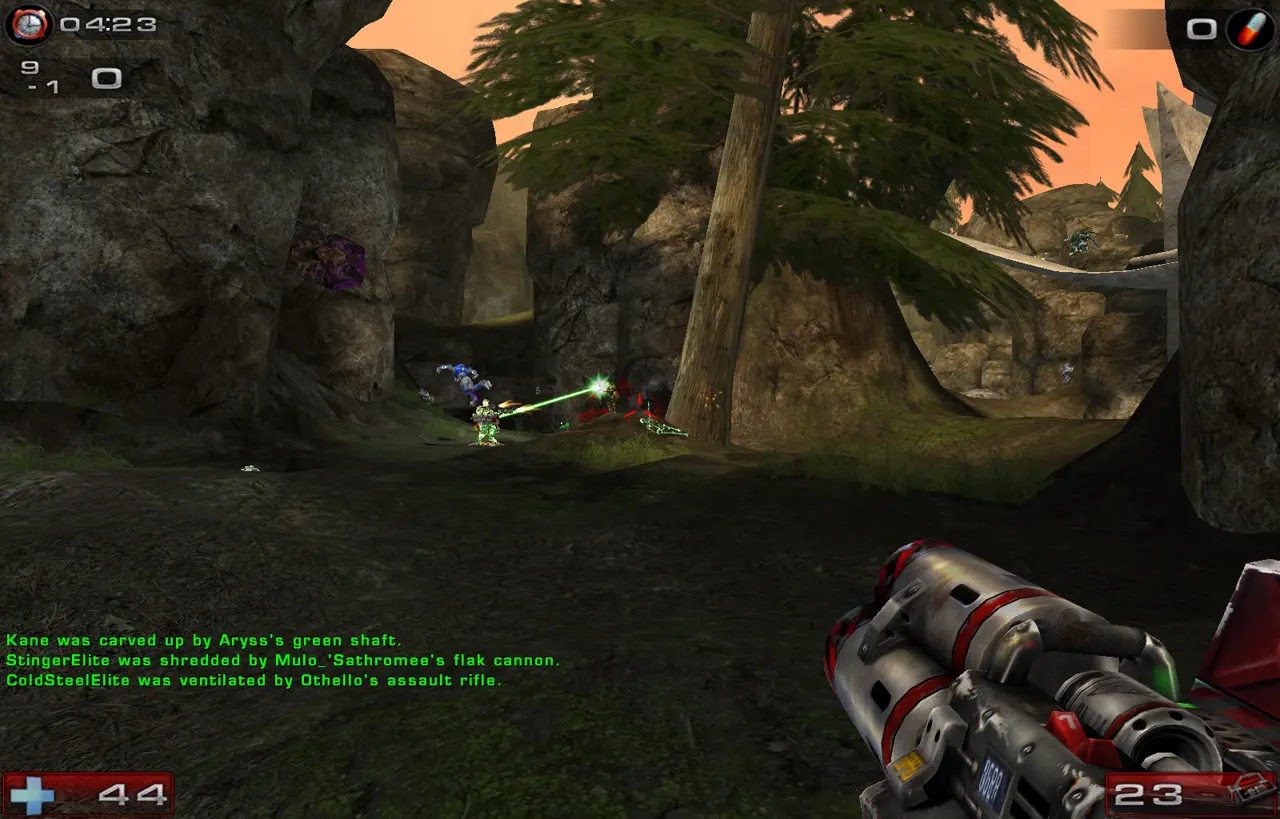
in classic fps games, weapon placement was a deliberate artistic choice. developers shaped the visual experience to balance immersion, clarity, and style.
the weapon's position was part of the game's identity, uniform across players, reinforcing a shared visual language. it contributed to immersion, anchoring the player in the world with consistent framing and perspective.
weapon offsets push the weapon off screen, diminishing its beauty and aesthetic design and erasing the visual identity it's supposed to carry. weapons are the most visually defining elements of an fps. once players start using offset options, the effects are immediate,
- that curated experience is diluted
- weapons start drifting toward screen edges, breaking cohesion and pulling attention away from the world
- multiplayer becomes visually fragmented, each player's screen tells a different story
this isn't just about aesthetics, it's about discipline in design. not every setting needs to be customizable, especially when it undermines the game's core presentation.
the illusion of choice
weapon offset feels like freedom, but in practice, it often leads to a paradoxical outcome.
- players are nudged toward one optimal setting
- that setting becomes ubiquitous
- the feature ends up recreating the rigidity it was meant to avoid, just through player behavior instead of developer enforcement
it's a simple contradiction. freedom leads to uniformity. and that uniformity isn't always better. it can erode the uniqueness of the game's visual identity.
developers don't design around marginal visibility gains. they build a cohesive presentation first, then bolt on offset sliders later because players ask for them or because modern fps design trends expect them. the slider is the afterthought, not the foundation, and once it's added, players can break the very framing the developers spent so much time crafting.
so what's the solution?
if developers want to offer customization without compromising presentation, they have a few ways to handle it.
- limit the range of offset values to preserve visual integrity
- offer offset as a cosmetic preset, not a free slider, so it stays a style choice instead of a competitive one
- or just trust their design instincts and keep weapon placement fixed, especially in games where the presentation matters more than player‑driven visibility tweaks
the goal isn't to remove player agency, it's to balance it with artistic intent.
is weapon offset really that different?
some people argue that weapon offset isn't any different from other customization features like FOV sliders or HUD scaling. those settings also affect visibility and immersion, so why single out offset at all? here's the nuance.
- FOV sliders change peripheral vision, but they don't distort the game's visual language. the weapon stays anchored, and the world keeps its proportions
- HUD scaling affects interface readability, not the core presentation of the game world
- crosshair customization is purely functional. it doesn't interfere with how the game frames its world
weapon offset, though, directly alters the composition of the screen. it changes how the player is visually represented and how the world is framed around them. that's a deeper aesthetic shift than most settings introduce.
it's still a fair point. all customization tools walk a line between empowerment and fragmentation. the real challenge is knowing where to draw that line and being intentional about the kind of experience the game is trying to deliver.
final thoughts
weapon offset is more than a toggle. it's a statement about who controls the game's visual narrative. when developers give up too much control, they risk losing the cohesion that makes their worlds compelling. and when players optimize for performance at the expense of presentation, everyone ends up with a less immersive experience.
customization is powerful. but power without discipline leads to chaos. and in game design, sometimes the best choice is no choice at all.























































I didn't even realize weapon offset was a thing and wish I still didn't haha
Sort of reminds me how in Team Fortress 2 you can use the 'r_drawviewmodel 0' command to hide your view model which completely removes your weapon. Feels like that's the inevitable progression of things like weapon offset where you'll eventually have a free cam with nothing else in view.
_____________________
Recently in Marvel Rivals, a third person hero shooter, there's some controversy over config edits.
The game is not greatly optimized, which led to people editing config files to reduce quality for better frames. This eventually led to players abusing the edits competitively to hide all clutter and improve visibility. The top hit scan players were playing in a bland, low-poly, shadowless world just because it'd make targets easier to hit. It felt only a few steps away from playing an aim trainer.
Now, config editing is banned and the game won't launch if you've changed files which has led to mixed sentiment. Some players glad the unfair competitive advantage has been nullified but others who used it genuinely to get a smoother experience are upset.
It's a tale as old as time, of competitive players lowering their graphics for an unfair advantage.
_____________________
In the game of Dead By Daylight, an asymmetrical multiplayer experience, four survivors are pit against a single killer. The survivors can't do more than complete an objective to escape and hide from the killer as they do so, while it's the killer's job to eliminate all the survivors.
For 8 years all killers had the same unchangeable (somewhat narrow) FOV. Thus their peripheral vision was limited and survivors could hide in corners more easily to juke them. An FOV increase was available to equip as a perk, the devs recognizing that an increase of FOV is an increase in power.
Ultimately, they did finally add an FOV slider in 2024. It subsequently nerfed stealth and nudged the game in the faster paced direction it is today.
I'm of the mindset that FOV sliders are in the same bucket as Weapon Offsets. Not just for meta advantages (as illustrated above) but also the framing of the game world too.
An FOV slider, by virtue of changing peripheral vision, distorts a games visual language.
A lower FOV can communicate the reduced awareness and feeling of claustrophobia in a horror game whereas a high FOV can lead to a distorted fish eye lens look which stretches the world and manipulates perceived scale. FOV sliders come with limits which are the bounds in which a developer is willing to allow their vision to be adjusted. Generally, the concessions of the feature are given for differing viewing angles or people with motion sickness.
Vermintide 2, a PvE FPS game, has a large FOV range. Allowing you to set it from as low as 45 to all the way to 120. But due to its non-competitive nature, most players don't feel the need to sacrifice visual fidelity for gameplay advantage which I think is a key part of remaining true to a developers intended experience.
_____________________
Your closing statement is a powerful one.
A setting like this is fine in a single-player or cooperative environment, where there's less pressure to be efficient. A player can offset their weapon to their own liking and enhance their own immersion. But in adversarial multiplayer games, the control is neither in the hands of the dev nor the player, it's in the hands of optimality. We all know the famous quote,
"Given the opportunity, players will optimize the fun out of a game." - Soren Johnson
Developers have a responsibility to protect players from themselves, and options like weapon offsets are an unintuitive failing.